

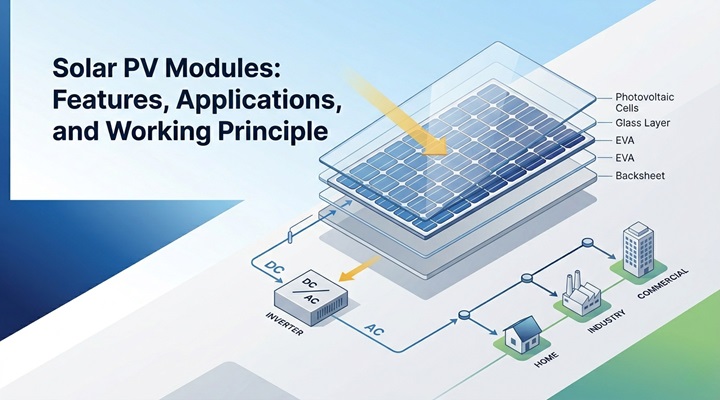
Solar PV modules refer to those electrical components that are responsible for generating electricity using the energy from the sun. They consist of photovoltaic cells that are combined together in series and parallel forms, thus allowing production of voltage and current to be used as the source of electricity by homes, industries, towns, and cities.
Components of a Solar PV Module
However, contrary to popular belief, a solar PV module is not simply a pane of glass. This device includes tempered glass, which is responsible for protecting the cells from exposure to water or dust. Below it comes EVA Encapsulation, which serves to protect the cells from moisture and dust. The back sheet offers insulation, while the frame helps in holding all the above-mentioned parts.
How It Works
Solar photovoltaic cells function by the phenomenon known as the photovoltaic effect. In this case, solar energy hits the silicon cells, photons strike the electrons, and this generates the flow of direct current. The generated current flows to the inverter, where the process of converting the current from direct to alternating is carried out. Cells can be wired together to increase the voltage by connection in series and increase the current by wiring them together in parallel.
Main Features
The panels have been designed to withstand harsh conditions such as heat, strong winds, and hailstones. Modules produced using quality materials carry a lifetime of 25 years and still generate up to 80-85 percent power after that duration. Monocrystalline modules today operate at efficiencies of 18-23 percent, thus making them suitable for installation on rooftops due to their higher efficiency rates. Polycrystalline modules, which offer lower efficiencies of 13-16 percent, are less expensive, hence good choices for large-scale installations.
Types of Solar PV Modules
Monocrystalline panels, made from a single silicon crystal, deliver the highest efficiency and durability. Polycrystalline panels, made from multiple silicon fragments, are more affordable. Thin film panels are lightweight and flexible but carry lower efficiency. Newer options like bifacial modules, which capture light from both sides, and N-Type modules with lower degradation rates are gaining ground in commercial projects.
Where They Are Used
Solar PV modules power residential rooftops, commercial buildings, farms, remote communication systems, water pumping setups, and large utility-scale power plants. In industrial settings, electricity bills often make up 20 to 30 percent of operational costs. A well-sized solar PV system typically pays for itself within 3 to 5 years, after which generation is virtually free for the remaining system life.
Waaree Solar PV Modules
Waaree Energies Limited, India’s largest solar manufacturer, offers a wide range of high-efficiency solar PV modules engineered for Indian climate conditions, from scorching summers to coastal humidity. Whether you need a rooftop solution for your home or a large-scale setup for your business, Waaree brings the manufacturing depth and product range to match your exact requirements.
