

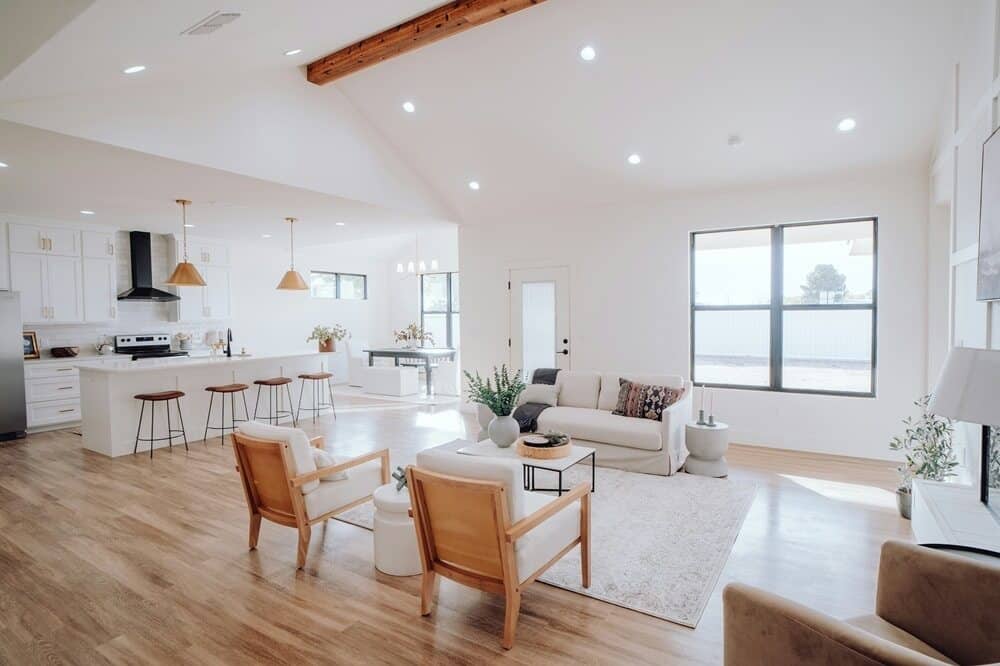
Open-plan living rooms and kitchen-diners look great and make homes feel bigger, but they come with one common complaint: they’re harder and more expensive to heat than a home with separate rooms. If you’ve noticed your energy bills creeping up since knocking through a wall, here are some practical ways to keep the space comfortable without overspending.
Zone your heating
Even in an open-plan space, you don’t need every part of the room at the same temperature all day. Thermostatic radiator valves let you turn down heating in areas you’re not using, like a dining area in the morning, while keeping the kitchen or seating area warmer where people actually are.
Use curtains and blinds properly
A large open space often means more windows, and more glass means more heat loss. Thick, well-fitted curtains, closed at dusk, can noticeably reduce how much heat escapes overnight, especially in a room with high ceilings or large glazed doors, which are common in open-plan extensions.
Check your insulation first
Before assuming your heating system is the problem, it’s worth checking whether the room itself is losing heat unnecessarily. Gaps around bifold or patio doors, thin loft insulation, or an uninsulated extension wall can all undermine even a good heating system. Sealing these up is usually the cheapest fix available, and it’s often overlooked in favour of more visible upgrades.
Consider underfloor heating
Open-plan spaces, especially kitchen extensions, are a common place for underfloor heating, since it warms the whole floor area evenly rather than relying on radiators pushed to the edges of a large room. It also frees up wall space, which matters in open-plan layouts where furniture placement is already a challenge.
Rethink your heating source
Traditional gas boilers can struggle to heat larger open spaces efficiently, since they’re designed to deliver short bursts of high heat rather than a steady, even warmth. This is part of why some homeowners moving to open-plan layouts are looking at alternatives that provide more consistent heat output across a bigger area throughout the day.
Furniture and layout matter too
Position seating away from direct exposure to large glazed doors where heat loss is highest, and avoid blocking radiators with furniture, which stops warm air circulating properly around the room and wastes the heat you’re already paying for.
Getting proper advice
If your open-plan space still struggles to stay warm after trying the basics, it may be worth a proper energy assessment rather than guessing. There’s a good discussion of whether open-plan living is actually working against energy-conscious homeowners, and what’s driving some people back towards more closed-off layouts, along with a look at renewable energy installations as part of the solution, worth reading if you want the fuller picture before making any changes.
An open-plan space doesn’t have to mean high heating bills. A combination of good insulation, smart zoning and the right heating system can keep costs down without giving up the layout you love.
It’s also worth remembering that a lot of the discomfort in open-plan homes comes down to draughts rather than a genuine lack of heat, so a simple draught-proofing check around doors and skirting boards is often the quickest place to start before spending money on anything bigger.
