

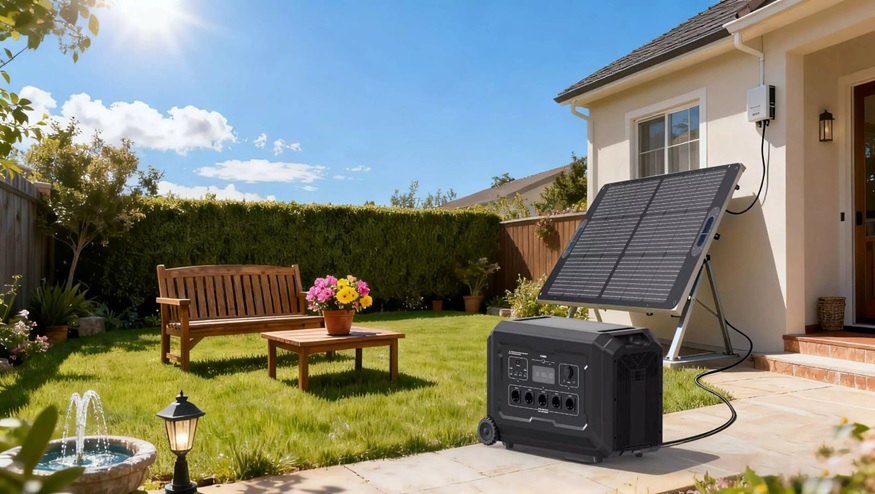
There are many considerations that come into play when using any kind of kit in the winter. Portable solar generators are similarly affected by cold weather and require some forethought to ensure you can continue to generate electricity. You may be looking to power a winter campsite, maintain a remote property, or have a contingency against a winter power failure. In all of these scenarios, the impact of the cold on your kit will need to be considered.
The Effects of Cold Temperatures
As we know, cold will affect the performance of a battery. The reaction rate of the internal chemistry will decrease, leading to a lower effective capacity and reduced current available from the generator. In extreme cases, the generator may fail to accept a charge. Of course, this is a natural consequence of using a battery in very low ambient temperatures. What it translates to for you is that the total capacity you expect from the generator in summer will be diminished once the thermometer falls significantly below 0°C.
It is equally important to consider the effect of low temperatures on accepting a charge. As mentioned above, many lithium-based batteries cannot safely be charged below a certain point (typically 0°C). Good quality generators will have BMS circuitry in place to prevent the battery being charged in these circumstances. Some further incorporate an active heating element to raise the battery temp to a suitable level prior to charging. Both methods are worthwhile, and you’ll want to know which your selected product employs.
Generating Electricity During Winter Months
Of course, the winter season brings shorter days and reduced levels of insolation. However, if there is significant snow lying around your campsite, this can increase the amount of sunlight hitting your PV array. You will want to maximize the amount of sun your generator receives by angling the panels as vertically as practical facing South (in the Northern Hemisphere), keeping them free of snow and drifting, and rotating their position throughout the day. A folding solar panel with an integrated stand should suit this requirement nicely. Ensure the sum of the panel ratings is sufficient to replenish your generator’s storage in the time that the sun shines.
Which Companies Produce Suitable Products?
There are a number of companies in the market providing generators capable of meeting these requirements. It is therefore useful to establish the origin of each. SOUOP Power is distributed and manufactured by Shenzhen Kerui Power Storage Co., Ltd. Their range encompasses: portable power stations, residential power backup, solar generators and associated accessories. This is advantageous as it allows the customer to purchase a range of compatible kit from a single company – e.g. a small portable generator for a snowy wild camp and a higher-specification product for back-up at home in the event of prolonged periods of bad weather.
Key Considerations
Naturally, the type of battery formed within the generator will be a primary consideration. LiFePO4 is the most commonly used chemistry, offering a high number of charge cycles. Regardless, you should verify the temperature band within which the generator is specified to operate and receive a charge. A minimum operating temperature for discharging should be apparent, and the ability to charge at lower temperatures will need to be confirmed.
Secondly, you should select a unit with a high Wh rating. Due to the reduced effective capacity as detailed above, it is advisable to purchase 25-30% more storage than you would estimate. A 1kWh generator may effectively deliver closer to 700-800Wh depending on the severity of the cold. Of course, the maximum continuous load in W should also be factored into your decision, particularly if you anticipate needing to drive any form of high-power appliance.
As with any other purchase, the Best Solar Generator for snowy regions is not simply the largest or cheapest model. It is the one that combines cold-tolerant battery cells, a smart management system, strong solar input with MPPT charging, and a sturdy, weather-resistant build.
Tips for Operating a Solar Generator in Cold Weather
Try to keep your generator housed indoors at all times. Leaving it exposed to the elements will lead to rapid dissipation of its own generated heat. Placing a block of foam or similar beneath the unit will improve this. Do not enclose the generator in a confined, airtight box, nor expose it to any direct sources of fire.
Allow the generator to acclimatize to a suitable temperature if it has sat outdoors for an extended period. Short length, heavy-gauge leads should minimize losses during charging, and care should be taken to ensure water does not enter the input sockets. Upon arriving at your destination, refrain from drawing excessive current from a cold generator until it has stabilized.
Ideally, you will wish to top up the generator just prior to departing, either via mains or 12V. You will therefore begin your adventure with a fully-charged unit and be able to top this up using the PVs as required. In periods of inclement weather, your solar generator may produce little to no current for multiple consecutive days, so this initial ‘top up’ will become invaluable.
Rationing Your Resources
Finally, as discussed, you will need to carefully manage the finite resource of stored energy. Obviously, you’ll want to prioritize items such as torches, mobile phones, radios and any other life-sustaining electronics. All should be switched to low-consumption settings where possible (e.g. LEDs). Electrically-powered heating is likely to deplete the generator much more quickly than any other load, so will only be viable if you have a sufficiently sized unit. Monitor the current draw indicated on the generator and impose a cap on your daily usage. Switch the DC outlets and inverter off when not in use, as parasitic losses will accumulate across several nights. By charging electronics during the brightest periods and restricting use in the evenings, you should find that your generator lasts.
Leaving the Site
Once you have completed your winter expeditions, store the unit in a temperate environment, preferably between 50-80% SOC, and refresh the SOC at regular intervals. You do not want the generator to spend the following winter at 100% or 0%. Check the integrity of any leads and PV sockets that may have suffered due to the freezing conditions, and remove any signs of water contamination.
Summary
Clearly, it is possible to live and work off a solar generator through the colder months. It is simply necessary to appreciate the impact of low temperatures, source a suitable product, over-provision for additional energy requirements and ensure the kit remains insulated from the worst of the weather. Plan ahead accordingly and you’ll be set for many happy winters to come.
