

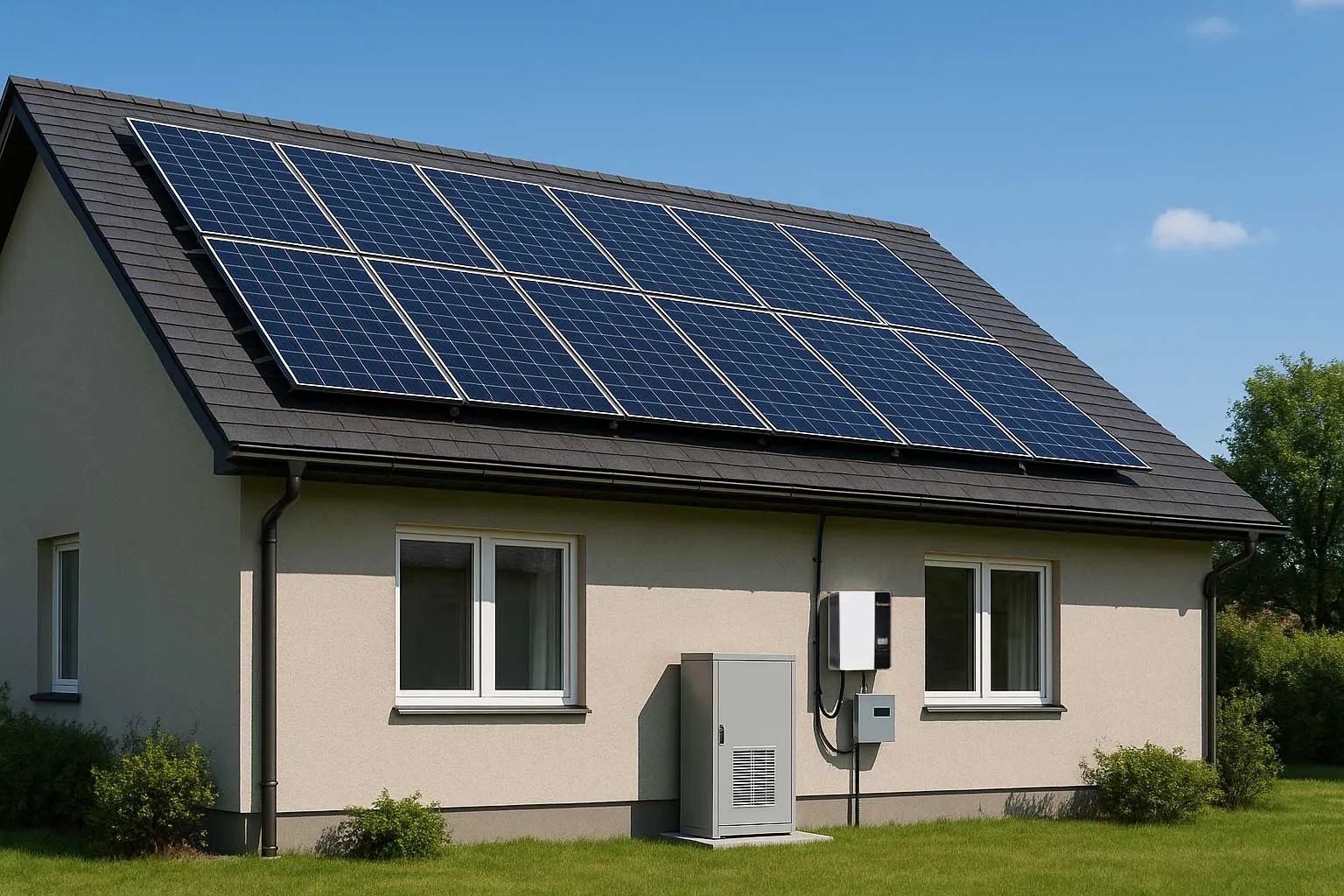
Envision a home that is powered by clean energy from the sun, protecting you from rising electricity bills and boosting the value of your home in the process. Adding a solar panel system to your home is more than just a home improvement; it’s a vital investment and a move towards a sustainable future.
We understand that being confronted with a list of options and brand names can be intimidating. Where do you even start? Do not worry, as you are at the right place. We will help you clear up the confusion and guide you through everything you need in order to be able to choose the perfect solar panel system.
Understand Your Electricity Requirements
Think of this step as establishing your financial goal. Before you can start saving money, you have to know how much you spend. The secret to a perfect solar panel system is knowing your home’s electricity appetite.
Get your hands on the past year’s electricity bills. Find the part of the bill that breaks down your electricity usage in kilowatt-hours (kWh). Add up the last 6 to 12 months and find your average. This is the magic number that will unlock the correct size of solar panel system for you.
For instance:
- For small houses, a 2-3 kW solar system is an ideal fit.
- Medium houses require a 3-5 kW solar system to cover the needs.
- A 5 kW or higher system will give the maximum benefit to larger houses.
Making the correct capacity selection ensures you do not waste money on an oversized system or have to deal with power outages caused by an undersized one.
Choose Between Hybrid, Off-Grid, and On-Grid Systems
Your house is unique, and your solar panel system should also be one of a kind. So, now we would like you to consider the three most common types of systems:
On-Grid System
This is the most popular and economical setup. Your house is tied to both solar panels and the electricity grid. During the day, you enjoy free solar energy. At night, you automatically source energy from the grid.
Off-Grid System
Ideal for areas with no electricity or for people who want complete energy independence. This configuration runs independently from the grid, with massive batteries to store power for nighttime or cloudy days.
Hybrid System
This is the modern and flexible alternative. A hybrid solution is tied to the grid but also has battery support. You still have power in case of an outage and enjoy the inexpensive cost of living.
Whichever type you use, a decent solar inverter is a necessity since it will transform the electricity produced by the panels into useful power that can be used in your appliances at home.
Pick the Correct Solar Panels
Solar panels are the front end of your system. This step is like picking an engine for a car; you want the most efficient product in your budget.
There are essentially two common varieties:
- Monocrystalline solar panels: These are excellent performers. They are black, sleek, and very efficient, which means they produce more power in a smaller area. If you have a smaller roof space, this is the best option for you to make the most out of the available sunlight.
- Polycrystalline solar panels: These are a great budget option. They have a unique blue colour and are not quite as efficient as monocrystalline panels, so you’ll need a little more roof space to produce the same amount of electricity.
Ensure that you check the following:
- Warranty period (should have a strong performance, typically 20-25 years)
- Efficiency rate
- Reputation of the brand
Be Mindful of the Solar Inverter
Homeowners will spend hours researching solar panels, but will give little or no thought to the inverter. This is something you should be cautious about.
Your solar panels harness energy from the sun but produce their energy in the form of “Direct Current” (DC) electricity. The electricity at your house is “Alternating Current.” The solar inverter’s job is to convert this electricity to a usable AC electricity that can power your lights, fridge, and TV.
Different types of inverters that are marketed are:
- String inverters: A robust and affordable solution for most residents.
- Microinverters: Inverters small enough to be mounted on each panel, maximising output from each panel – suitable for roofs with shading.
- Hybrid inverters: Crafted to integrate smoothly with battery storage for enhanced flexibility.
Check Upon Direction and Condition of the Roof
Before setting up solar panels, check if the foundation – your roof – is ready for the installation.
The key considerations are:
- The condition and strength of the roof: Solar panels have a working life of 25+ years. It is recommended to replace, fix or repair an old/damaged roof before installing solar panels. In a few years, you don’t want to take down your solar panels because of a roof renovation.
- Shade and Direction: In India, if your roof faces south, it will receive the most sunlight. Be aware of any trees or structures that could cast a shadow on your solar panels, as this could affect your solar panel performance and ultimately your solar inverter’s efficiency.
Select a Trustworthy Installer
You’ve researched and selected the best components. Now, you need a team of people you can trust to put it all together. Even the best equipment in the world will not perform well if it is not installed properly.
- They should offer the right warranties for the equipment as well as the workmanship of their installation.
- You should ask if they have maintenance services and if they can monitor your system to track the energy you are producing through easy access on your mobile phone connected to your solar inverter.
- Inquire about their maintenance services and whether they provide system monitoring so that you can monitor your energy production through a simple mobile app, directly connected to your solar inverter.
Verify the Warranty and Post-Purchase Support
Generally, solar panels come with a warranty ranging from 20 to 25 years. On the other hand, the solar inverter usually comes with a 5-10 years of warranty.
As the inverter is in continuous operation, it is likely to be serviced or changed before the panels. Check if spare parts and service centres are readily available locally. Good after-sales service will ensure that your investment is safe for years to come.
Concluding Thoughts
Choosing the right solar panels for your home is not as difficult as it seems to be. First, it is important to have a clear understanding of your power consumption, then determine which type of system will best meet your needs, and finally, focus on quality components.
It is the panels that dominate the system’s appearance. Nevertheless, it is important to remember that your solar inverter is also an essential part of your system that should be valued.
You need to be patient, weigh your options, point out issues, and partner with a good installer. Once you have a proper system installed for you, you can look forward to lower electricity bills, energy independence, and many years of stress-free living.
